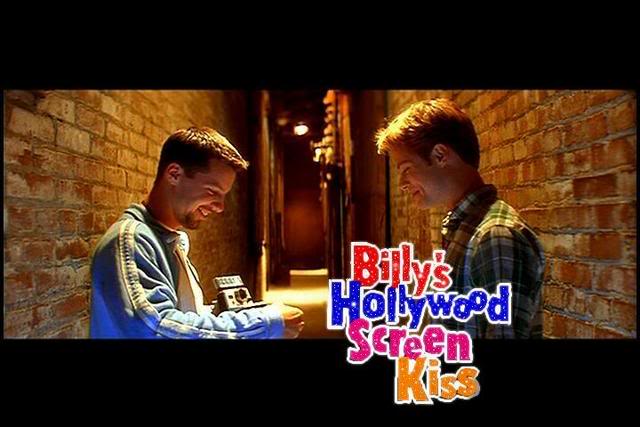
Billy's Hollywood Screen Kiss - Tommy O'Haver
 |
| http://static1.squarespace.com/static/545813b0e4b02b2abc692a7d/545815afe4b0d615f8a635e8/545815afe4b0d615f8a635f2/1415058886015/billyshollywoodscreenkiss.jpg?format=1000w |
INTRODUCTION
This review is written in attempt to determine the elements of Queer theory found in the film Billy's Hollywood Screen Kiss directed by Tommy O'Haver in 1998. The theory to use is semantic and syntactic approaches to genres.
THEORY DISCUSSION
New Queer Cinema is a term often used to describe renaissance of gay or lesbian film-making by Americans in the 90s. However, this independent film movement mainly focuses on males desire in male homosexual cinema rather than lesbianism.
The theory also discussed the confusion of sexual and gender identity in its film, portrayed through various intimate visuals and suggestive contents. The film usually targets both straight and non-straight viewers as it is not necessarily made for or limited to LGBT community only.
SYNOPSIS
Billy Collier is a gay Polaroid photographer in Los Angeles who wants to create a photographic series by recreating famous Hollywood screen kisses. He doesn't want to be a stereotypical gay man in having indiscriminate sex with any man that comes along because he is serious about his relationship and wants a committed partner.
Billy is strongly attracted to a waiter, Gabriel when he's looking for model for his photo series. Billy asks him to be the model and he agrees to do it. Billy is disappointed to find out that Gabriel is straight and even has a girlfriend, Natalie but he's certain that there's a gay vibe from Gabriel.
Gabriel rejects Billy's suggestive moves when he overnights at Billy's place on the same bed. Things become really awkward between them since then, and eventually leads to separation despite their newly-formed friendship. Billy's Hollywood screen kisses photo exhibition is very successful in the end, he even gains a new friend (fan?) which admires his works at the exhibition.
ANALYSIS
The film showed the viewers briefly about what was it like to experience real romance as a gay man where it was not just about having casual sex. The struggles of Billy going through his days as a homosexual photographer was clearly shown in the film.
Just like any other ordinary couples, Billy would get upset over his lover because he felt like the 'other man' in his ex-relationship. There were also many scenes where he was having internal conflicts and being in dilemma about getting strongly attracted to someone who seemed gay to him but declared straight.
In the film, there were also parts where the character experienced some sort of confusion about his own identity. Gabriel seemed to get confused about his sexual orientation sometimes, was he gay? Or was he not? Although he had a girlfriend who was in a long distance relationship with him, he was tempted to respond to Billy's suggestive actions during his stay at Billy's house. When Billy sensed gay vibes coming from Gabriel from time to time, it was quickly denied by Gabriel although he did feel something different was going on between them.
Although it was a little disturbing to watch some of the intimate scenes, I liked the film when I watched it as a viewer who could empathize Billy for his sad unrequited love as well as his dilemma about not being able to open up his feelings to the one he liked a lot. Everyone would experience similar emotion while dealing with love and internal conflicts like these.
Besides, noticing the characters were mostly homosexual in the story, it was actually quite interesting to see the heterosexuals somehow became minority in the film as it was unusual in other ordinary films.
In addition, the concept of drag queen being portrayed in this film was also unique as it had been shown a lot of times in the story. Whether it was in the opening credits or during Billy's dream sequence or even when his ex-lover was cross-dressing in the film, the art of drag was fascinating and unique to me.
CONCLUSION
In conclusion, Queer Theory discussed about the making of homosexual and lesbianism independent film. If viewers could watch it as an ordinary romantic film without prejudice against LGBT community, they'll be able to enjoy it much better.
REFERENCE


Comments
Post a Comment